Polychromos or Prismacolor: my comparison after 5 years
🛟️ Curious about these items?
I’ve reviewed them below, but if you already want to see them on Amazon:
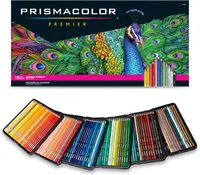 Prismacolor Premier - Colored Pencils
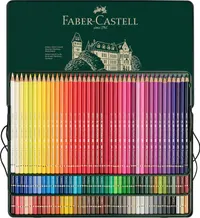 Faber-Castell - Polychromos - Colored Pencils
As an Amazon Associate I earn from qualifying purchases. This does not change the price you pay.
The question everyone asks
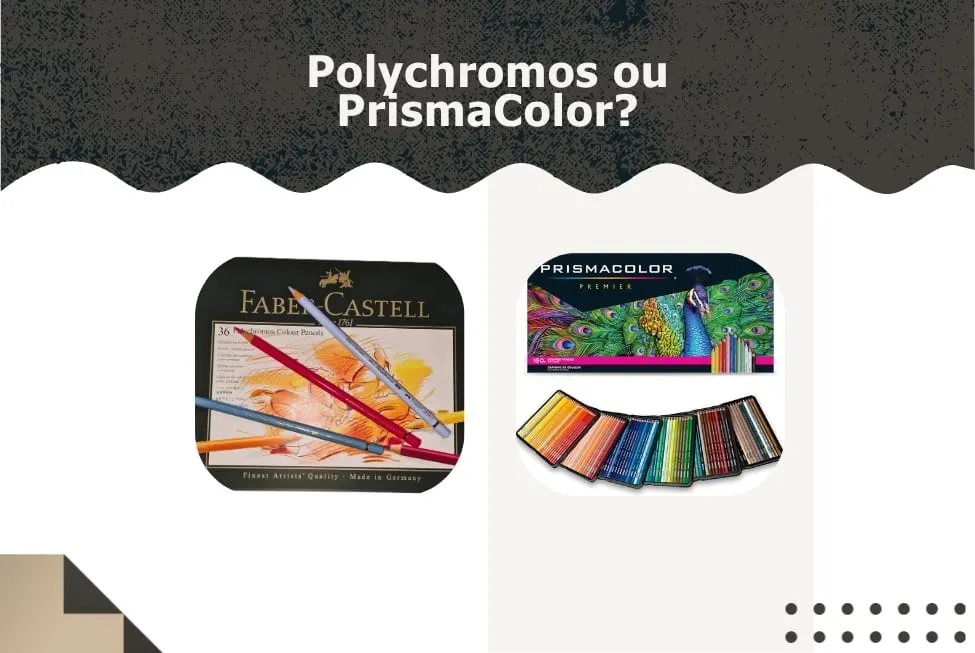
It is the question that keeps coming back when you want to move up to high-end pencils: Polychromos or Prismacolor? Both are expensive, both have their fans, and the comparisons I used to read never helped me much, because they all repeated the same things.
So here is my opinion after five years of mystery coloring with both. Not a technical review from an illustrator, but the view of someone who fills numbered areas for hours.
My short answer: I reach for the Prismacolor more often, but not because they are better.
36 versus 150: the difference people forget
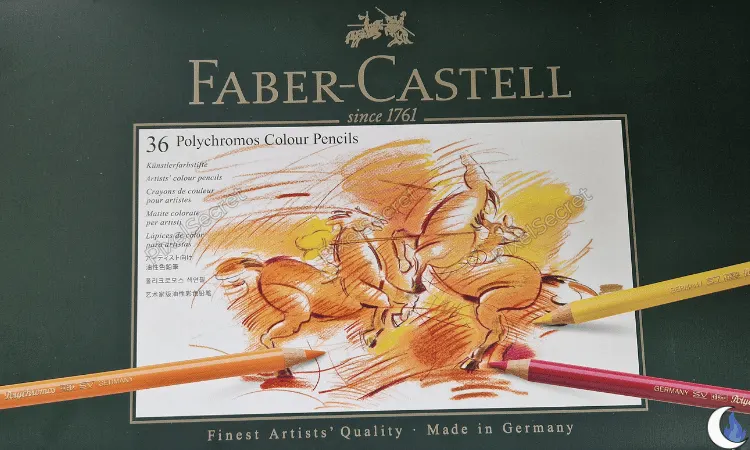
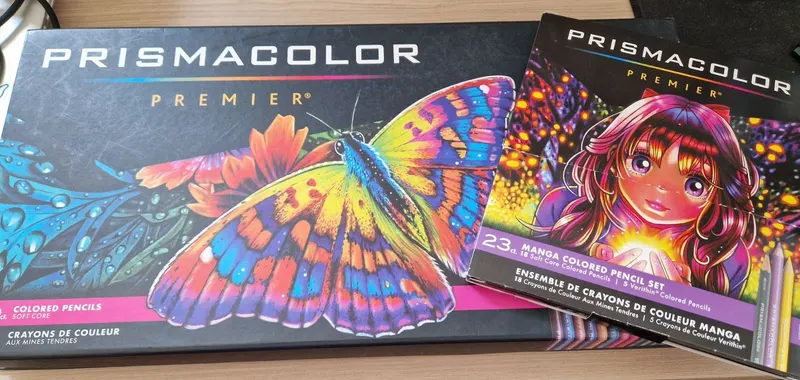
My Polychromos tin holds 36 pencils. My Prismacolor Premier box holds 150. On paper it sounds like a detail. In mystery coloring it is huge.
In a mystery coloring page, the colors are imposed by the grid. You do not choose, you follow. A fairly detailed plate easily calls for thirty different colors, and some of them are very close to each other. With 150 pencils you almost always find the exact shade. With 36, you spend your time layering to get close, or making compromises.
This is not a flaw of the Polychromos, it is a question of which set you buy. Faber-Castell also sells them in 60 and 120, and you can buy single pencils, which I really like. But if you are comparing a box of 36 with a box of 150, start by comparing that.
Wax versus oil: where every difference comes from
Everything else follows from one single thing. Prismacolor Premier use a wax-based core, it is even printed on the box: soft core. Polychromos use an oil-based core.
Wax is soft and greasy. It lays down a lot of pigment with every stroke, so it covers quickly and without effort. A large area is filled in two passes, your hand does not get tired, and the result is dense straight away.
Oil is harder. It lays down less, so you need several passes to reach the same density. It takes longer and asks more of your hand.
Except that it all flips around as soon as you want to blend. With the Prismacolor, the tooth of the paper fills up so fast that after two passes there is no room left to put anything else on top. I find blending really hard with them, and for a long time I thought it was me. It is not me, it is the wax. With the Polychromos, because each pass deposits so little, you keep control to the very end and you can layer ten times over.
So: fast coverage on one side, blending control on the other. There is no winner, there is a trade-off.
My two coloring pages, side by side
The clearest way to judge is to look at the result. Here are two plates I colored, one entirely with Polychromos, the other entirely with Prismacolor.

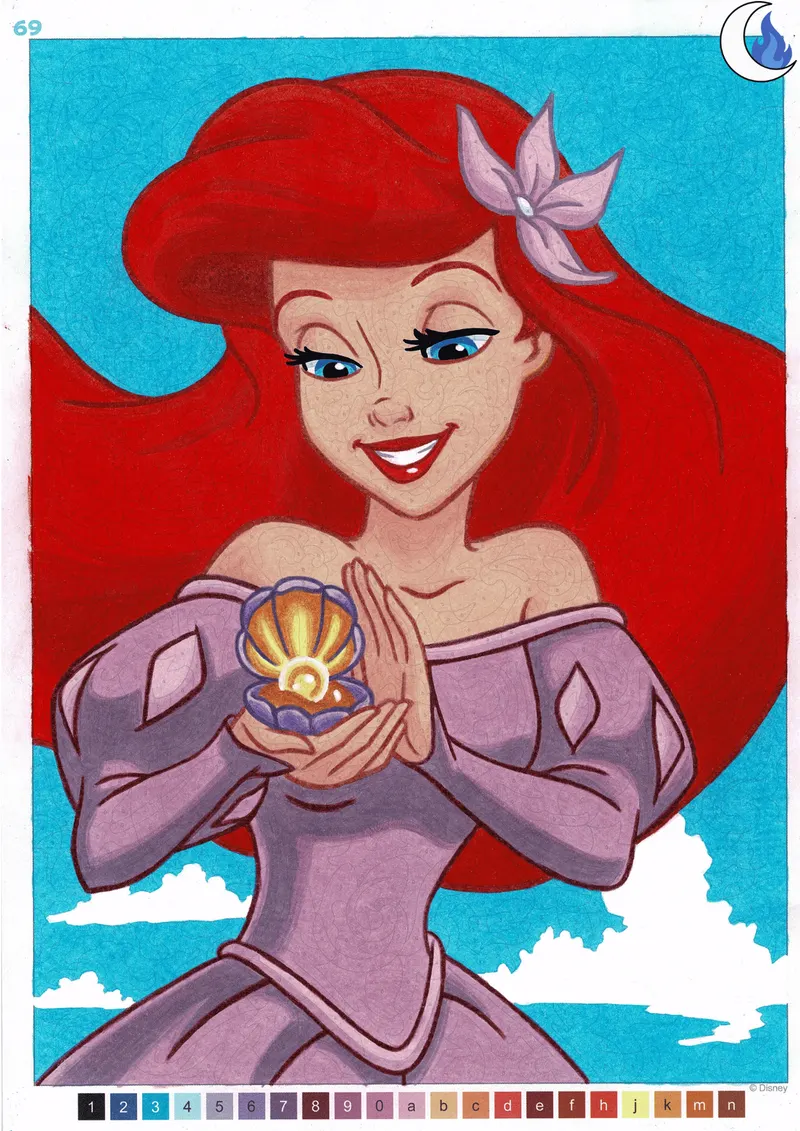
On Ariel, the flat areas are completely filled. The red hair and the purple dress are dense, the grain of the paper has disappeared, and the glowing shell blends on its own. It is the kind of result that looks like a printed image.
On Belle and the prince, you can still see the pencil and the paper. The skin tones have more nuance, there is texture, and it looks much more like a drawing than like a print.
Honestly? I find the Prismacolor result prettier. But that is a matter of taste, and it is debatable: plenty of people prefer to see the pencil.
The smell, and why I am bringing it up
There is one point nobody ever mentions in comparisons, and it matters to me: Prismacolor pencils smell strong. Really strong. It is the wax, a greasy smell that hits you when you open the box and that lingers when you color for a long time.
Polychromos barely smell at all.
If you are sensitive to smells, if you color in a small room, or if you spend three hours straight on one plate, this is not a detail. I would rather tell you before you order a box that costs over a hundred euros.
Wax bloom after 5 years: what I actually checked
This is the number one complaint about Prismacolor, and you read it absolutely everywhere: wax bloom. The wax is supposed to rise to the surface over time and leave a whitish haze on the most heavily colored areas.
So I pulled out my old coloring books and looked, plate by plate.
No white haze at all. After five years, nothing has changed.
Let me be precise about my conditions, because they matter: I color in books, which stay closed and stored on a shelf. Not framed sheets, no sun exposure, no heat. Wax bloom also depends on how thick the layers are and on temperature.
So I am not saying it does not exist. I am saying that under the normal conditions of mystery coloring, meaning a book you close again, it did not happen to me in five years. And that is exactly the situation of most people asking the question.
Which one I pick when I start a plate
In practice, I grab the Prismacolor. For a very down-to-earth reason: a mystery coloring plate means hundreds of small areas to fill, and they cover quickly without tiring my hand. Over three hours of coloring, that changes everything.
I bring out the Polychromos when there is blending to do: faces, skies, fabrics. That is where their hardness becomes an advantage.
And I really like one small detail about the Polychromos: the color number is printed on the pencil itself. It sounds trivial, but when you are making a color chart, it is priceless.
So, which one should you choose?
I am not going to name a winner, because there is not one. Here is how I would decide in your place:
Go for Prismacolor Premier if you mostly do mystery coloring with lots of areas to fill,
if you want a dense, vivid result quickly,
if you do not want to tire your hand during long sessions,
and if strong smells do not bother you.
Go for Polychromos if you work on gradients and soft blends,
if you want a point that holds and a precise line,
if you are sensitive to smells,
if you prefer to see the texture of the pencil in the result,
and if you like being able to buy single colors.
And if you are still hesitating: both are excellent. These are pencils I have kept for five years and they have not aged. It is not a choice between good and bad, it is a choice between two ways of coloring.
The visuals (illustrations, excerpts, photos) shown on this page are used for illustration purposes and remain the property of their respective authors/publishers. Trademarks and names belong to their respective owners. Colorings and photos are by Usako unless stated otherwise. Any reproduction, distribution, or commercial reuse is not allowed without the prior consent of the rights holders.